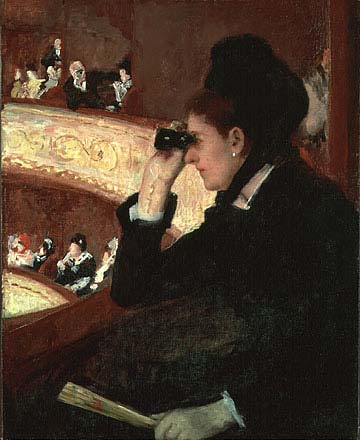
It was a mistake. Of course Raye could see that now. But the thing about making mistakes is that you never realize that’s what they are until it’s too late. And oh, how donating to a certain opera organization was a mistake. One she had made during a rare blip in time when she was making relative “bank” at a job that, predictably, she hated. And with so much “extra” cash lying around, she fell prey to the odious notion that she “ought to” “give back” in some way to an institution that few people probably considered (or so she was led to believe). Especially people in her younger age demographic. After all, it was no secret that the opera had long been almost exclusively reserved for “gays and grays.” And that, try as they might, the puppeteers behind “garnering opera interest” had mostly failed to draw up a new generation of business.
And that meant, unfortunately for Raye, being hit up for more cash for all of her remaining days (and even maybe into the eternity of the great beyond) as a result of the one time in her entire existence that she made the arbitrary, never-to-be-repeated decision to donate to a “good cause.” But she had long ago started wondering, with each fresh waste of ink, paper and postage they invoked to make contact with her at whatever new address they had managed to track her down at, if it really was a good cause. Do good causes need this much help to stay afloat? Well, yes, she admitted. Generally speaking, most of the best causes—art, literature, music—died off because no one had been willing to put in the necessary money to keep the quality level afloat. Particularly in relation to how few people actually seemed to even be interested in the endeavor. So why put in dough to make something extra “nice” when no one was paying attention and/or gave a fuck?
Even so, arts-oriented entities like the opera can’t give up—refuse to, in fact (clearly). Besides, “legacy” organizations that have money (despite [and because of] constantly asking for more) to shake people down on a mass scale always find a way to endure. Don’t they? That’s what Raye told herself every time she felt a slight pang of guilt over trashing the letter that had involved so much effort—in terms of the tangible resources used (not to mention the “manpower” put in to trace her whereabouts)—to send her. The letter that kept imploring, “We invite you to donate once again, and help to ensure a strong financial future for our extraordinary opera.” Her internal response to this form of audacity, as she would often tell others whenever she got the latest letter in the mail “strongly urging” her to “consider” donating again, was: I donated one time—one time! In what world did that mean she would be perennially tortured with the ongoing expectation to keep doing so?
Raye laughed to herself as she let the paper slide out of her hand and into the trash for the umpteenth instance of displaying her “disregard” for “culture,” wishing someone would help to ensure a strong financial future for her. Instead, it seemed lost on the opera that this wasn’t even her residence, just the place of a friend who she was housesitting for until they got back from vacationing in Florida at their timeshare (the height of middle-class “luxury”). That would be mere weeks from now, and yet, in all their Big Brother wisdom, the opera had managed to find her. Or rather, a place where they could “make contact” with her. She had probably put this address down maybe once somewhere because she was forced to for some blasted online job application. And likely yet another job she wouldn’t even get. It was all, instead, the universe’s sick ploy to make her location known to the opera so that they might then send her another fucking letter reminding her of what a deadbeat patron of the arts she had been. How negligent of her former noblesse oblige. Even if the opera was hardly “less fortunate.” It was awash in donations it chose to ignore in favor of continuing to cry, “Povertà!” (a nod to how real opera is usually in Italian). Because no one wants to give to somebody (or something) that appears to be “flush.”
Yet that’s exactly how the opera did appear. All dripping with furs and jewels as the elder gatekeepers of wealth and prestige flounced in and out with their noses upturned. It was no wonder that nary a soul outside that particular circle—Raye included—wanted to form a “lasting partnership” with the organization. Whether that referred to actually attending an opera or simply donating. Naturally, the opera didn’t really give a toss if you went or not; they just wanted the bread. Nonetheless, they were sure to include a detailed description of their “fantastic” program for the upcoming season, all part of the relentless bid to “entice” you to part with what little money you had left as a result of living in the “big city.” The only milieu, in short, that could ever furnish an enterprise like the opera.
Never mind that, for those who ended up leaving the city, it would only vex/infuriate them all the more to realize that anyone who entered the revolving door of that environment was nothing more than usable and reusable dollar signs to the organization (and various others—usually arts-oriented—like it). That to send them letters in their current “far-removed” location (for, to those in NYC, everywhere else is far-removed) was a form of schadenfreude. A taunt meant, in some sick way, to both beckon the former patron back and also remind them of what a failure they were for having to leave in the first place. And although Raye was still in the state of New York, she knew she would never go back to the city. That ship had sailed many times over, and she wasn’t about to ever attempt getting back on it again. Least of all to take in an opera performance.
A part of her was almost tempted to write back to them. Their address was listed plainly, was it not? And she felt compelled to tell them, in graphic detail, just how much she never wanted to donate again. That the first time was always meant to be the last time—a mere fluke in the stream of her existence. A fluke—nay, as mentioned, a mistake—they kept exploiting. No matter, Raye would be on the move again soon, and perhaps it would take them much longer this time around to figure out what address she was crashing at. It was like a little game of cat and mouse they kept playing. But, in the end, the opera was the mouse: caught in the trap of promoting and presenting art within a capitalist framework.
 Literary Bitch