There are many, at this point, who insist that “convenience” is what ruined humanity. That it turned people into the lazy, dumb, helpless fucks that most of them became. As if a devolution occurred after so many years of progress. A plateau followed by a complete dive. Starting from a civilization of cavepeople and ending up as something far worse. Because at least cavepeople were self-sufficient, not reliant on forms of technology-based “convenience” that could go the way of the dodo on a whim. All that needed to happen was a permanent internet blackout or some other such “resource wipeout” that rendered all of this modernity null and void.
Kira was, like others, always vaguely aware of this somewhere in the back of her mind. But it didn’t stop her from becoming increasingly dependent on the conveniences that technology—and, more specifically, the internet—had furnished her with. From apps that summoned a car on command wherever you were to getting whatever you wanted (or, more rarely, needed) delivered right to your door, there was no shortage of convenience in this “modern life.” Solutions to problems that weren’t really problematic at all, if you had the patience to deal with monotonous tasks.
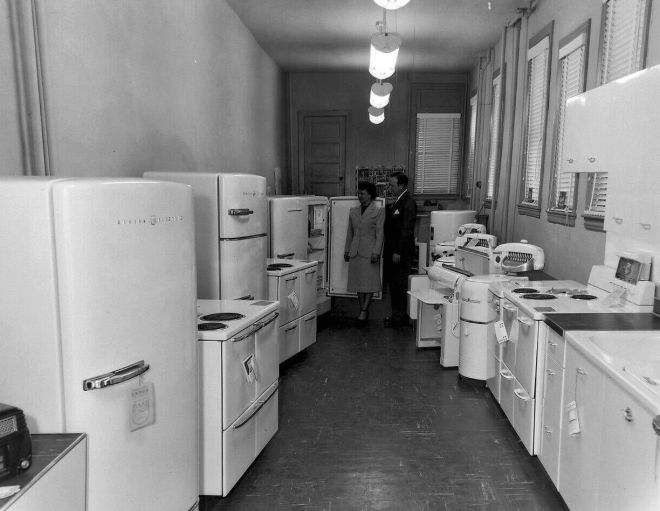
Take, for example, something as basic as hand-washing clothes and then hanging them out to dry. A practice that began to change drastically in the 1700s and 1800s with the advent of crank-operated washing “machines”—at that time, ultimately just crude barrels or basins that could shake your clothes around if you had the grit and elbow grease to turn that crank. By the late 1930s, it was all systems go on the modern version of an automatic washing machine entering “the domestic sphere.” At the same time, electric dryers were coming up in the world so that, by the 1940s and 1950s, these beacons of convenience were starting to become more common (even if, at that time, only amongst more well-to-do households).
Kira, as most others living in the present, couldn’t imagine an existence without such appliances that had become all but de rigeur in day-to-day life. In fact, it would never occur to someone like her that these things weren’t “expected.” Because they weren’t a “luxury” as they had once been during the infancy of their invention. Indeed, they were commonplace, no big deal. Well, that is, unless one lived in certain countries on certain continents. But the people living in such places, even if it was through no choice of their own, were probably better off. Because they would know how to survive when the inevitable reckoning came. Some worldwide electrical outage that would force everyone to return, in some sense, to the way their early ancestors lived. That is to say, simply and without any conveniences whatsoever.
Kira, whose life revolved around convenience, wouldn’t even deign to fathom such a reality. Not that she was “too busy” to, or anything like that. In fact, all of this convenience had freed up a lot of time for everyone to theoretically “take pause” and “reflect.” Not that they actually did, or would. There were far too many convenient distractions to keep her from dwelling on anything too serious…or too real, for that matter. And that was how she preferred it. Getting sucked into a screen of some varietal that would remove her mind from the realm she was actually in. The mere prospect of not having access to that constant source of “entertainment” as her numbing drug of choice was unthinkable.
But then, lo and behold, the day that everyone knew was coming sooner or later finally arrived. The internet, and all electricity, went down. It wasn’t just some “fluke” of an outage. It was steadfast and unending. At first, Kira was naïve enough to believe that the internet might return. It just had to, right? It always had before. Why should it be any different this time? But as hours turned into days and days turned into weeks, it became glaringly obvious that things were never going to be the same again. Never going to be convenient again. Though Kira could so clearly remember the days when they were. Lusting after them like a crack fiend for a fix that could never be attained. Her fingers still twitching in the middle of the night as if she were continuing to tap away on her phone or computer—the muscle memory of it impossible to shake now. Even though almost two years had gone by since the blackout.
The proverbial They never could figure out—or at least wouldn’t say the truth aloud—what or who really caused it. Nor did they seem all that determined to unearth the alleged mystery behind it. It was almost as if the majority was contented with the outcome of this perma-internet and power grid blackout. Because it forced them all to “get back to the land.” To focus on their “community” face-to-face, tactilely. No diversions or mitigating apps to get in the way and turn them all inward again. Individualist and isolated. But Kira wasn’t content at all. She missed the way it used to be. The glorious convenience of everything being controllable and commandable at the touch of a button. Didn’t anyone want to get back to that, instead of the land?
It appeared that, no, nobody did. Not even the incels who had formed their own kind of “community”—toxic and hostile though it was—online. For they were at last deemed “useful” for helping to propagate the species, considering that so much of it had been wiped out in the nuclear attack that followed the blackout (surely, the two were correlated—but then, who knows? Sometimes multiple catastrophes just happen to coincide so “sublimely”).
Never mind that those suddenly agreeing to have sex with them might have wanted to more carefully vet what kind of gene pool they were choosing to proliferate. Alas, all the old rules—the rules of “being civilized” in a post-technological advancement world—had gone out the window now. But oh, how Kira missed them. Because, in truth, she said to herself as she finished taking a piss in a bush, Convenience rules.
And for anyone to try to say otherwise at present, just because there was no going back to that old new way of life, was a goddamn lie. A means of self-preservation to keep forcing oneself to survive in this ghetto of a planet. Though, having known how much easier it once was to live there—even if that “ease” made it so much harder (and life on Earth so much more unsustainable) in other ways—Kira had to wonder how much longer she could keep going if this memory of how it used to be wouldn’t subside. At least cavepeople had never known convenience in the first place. To become, against one’s will, a caveperson at this juncture was a much taller order in terms of psychological torment.
 Literary Bitch