Perhaps, on principle, they shouldn’t have worked there. Should have put their foot down about supporting an institution that showcased and profited from a time when trans people were not just “subjugated” (to use an overly polite word), but when their existence went unacknowledged altogether. Or worse still, if acknowledged, then summarily “stamped out” by any brutal means necessary (though some might be wondering: how does that really differ from the present?). This, after all, was even well before the first known gender reassignment surgery occurred, at least in the “modern” world. Who knows what might have been going on in ancient times, with the Roman and Byzantine Empires rife with cases where people sought some sort of gender-confirming procedure (though it didn’t necessarily mean they were going to get it). Gray had been studying that period of history far more than the Victorian era when they first applied for the job at the museum.
Like most things, it was done on a lark. They happened to be driving by the museum with their friend, Paul, who looked over and noticed the sign that was out. The one that advertised its need for “capable docents.” Paul glanced at Gray, who was intently focused on the road, before snapping a picture of the sign so he could tell them about it later. It was always their manner to stare ahead in silence, unable to talk and drive at the same time without getting into a near-accident (or sometimes, even a full-tilt one). All they could manage was listening to the radio at the same time as driving. But factor in the need to change the station and it became too much “multitasking.” This is precisely why Gray preferred to have a passenger along for the ride. Someone to be there when the music inevitably needed to be changed. Paul was happy to accommodate that request, because it meant he could get out of the house and away from his parents. After moving back home upon graduating from college, Paul found that the only person left, the one he used to know as Sean, had become Gray. A name, Paul imagined, that still felt “gender neutral” to the former Sean. He didn’t ask, of course, but a moniker like Gray seemed very pointed, very “by design.”
To his surprise, Gray had never left town at all, opting to go to the community college nearby rather than splurging on some state school (which their mother wouldn’t have paid for anyway). Besides, they were waiting for their mother to die and leave them her modest two-story abode (with an attached garage), which they then fully intended to turn into a trans halfway house. Something the community sorely needed, but would of course never get. Because the government did not believe in allocating funds to “such things.” For, much as in the Victorian era, it was preferable to ignore the fact that trans people existed at all. Instead, the government was more inclined to allocate its funds to the preservation of “institutions” like the museum that Gray was now working in. Monuments to the past that didn’t really deride the viewpoints and “ideals” from that period, but rather, seemed to uphold and applaud them.
Naturally, there were many “disclaimers” (especially in the state of California) about how some things present in the museum might “trigger” certain ilk, but beyond that, it’s not as though the museum, run by the local government, really did much to condemn the past. To announce, in no unclear terms, that it was bullshit. What was done to the “minorities” of this “Promised Land.” And nowhere was deemed more promised than California. A state some still feel is too “new” to have ever experienced a Victorian era. And yet, the state didn’t really “start” until the Victorian era, with the Gold Rush that kicked off in 1848 (1849 being the peak year of it all). As a matter of fact, it was the Gold Rush that prompted Congress to finally “allow” California to transform into a state in 1850, the thirty-first to become part of the Union. Gray still liked to believe they were living in Mexico though. The daily implementation of casual delusions are, in the end, how one thrives.
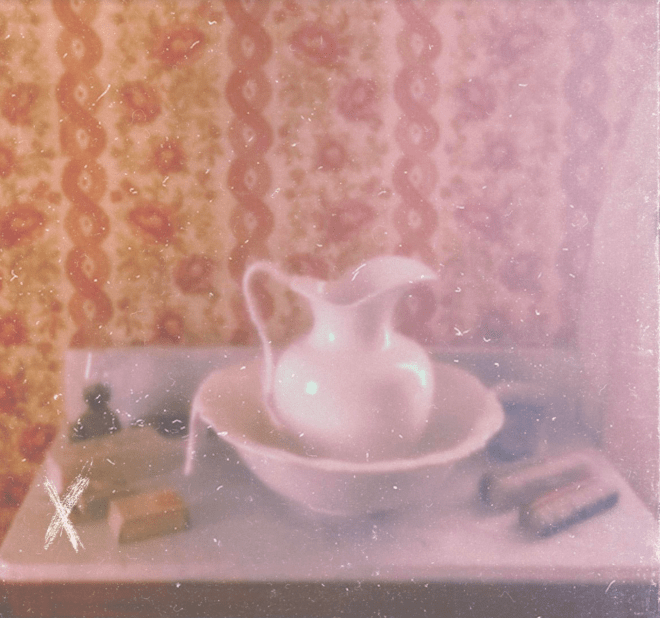
Which is why Gray told themself that they weren’t just “the trans docent at the Victorian museum” (and they knew that’s how everyone saw them, thinking it an incongruous irony), but that they were living in Victorian times for real. Except, not the Victorian times that people had come to know and understand from the history books, but rather, a version of it wherein it was acceptable to be trans. Not scandalizing, ostracizing or any of the other bad “-izings.” That’s what Gray had to do in order to “feel okay” about this low-paying job (though, in the museum’s defense, most docent jobs were volunteer-based—again, thank government funding priorities for that). One that forced them to tap into a historical period that was even less “welcoming” to “their kind” than the present. Though, at times, Gray questioned whether or not that was really true. If, in certain regards, there was a bizarre sense of greater “openness” during this notorious epoch of repression. Because, as it is said, one never knows what goes behind closed doors. And what might have gone on behind the closed doors of this very museum, which was just a Victorian house the local government had slapped a sign on and decided to make money off of by charging a price for admission.
Naturally, the home (or mansion, if you prefer) had belonged to one of the town’s affluent “founding” families. The type of family that would have never “permitted” a trans progeny to exist, as far as they were concerned. Even Gray’s own mother could only “cope” with their existence by still using incorrect pronouns and addressing them by their dead name. In response, Gray tended to limit their interactions with Mother as much as possible. It was simply too painful. Though not as painful as the idea of losing their inheritance to the ASPCA or some shit just because they didn’t maintain a “friendly enough” rapport with the narrow-minded puta. And because she was so narrow-minded and one of those people who couldn’t be “taught,” Gray knew that it was useless trying to explain how much she hurt them by continuing to act as though no gender-affirming surgery whatsoever had transpired. Even though she was the one who ultimately footed the bill for it (Gray was on her insurance policy, after all).
It was these and other thoughts that Gray let fade into the background while informing unlikely visitors of the museum (one couple came all the way from Yokohama to see this “slice of American life”) that Victorian men used mustache cups in order to effortlessly drink tea and coffee while maintaining the premier facial hair fashion of the day. No self-respecting man of the Victorian era would dare exist without a mustache. The former Sean would have though. He would have been shaving that shit as soon as it grew in. Knew it didn’t compute with who they really were. And that, in the end, would have been what got them tarred and feathered in the nineteenth century. Leaving their upper lip bare and giving away their “femme” tendencies as a result.
Gray wouldn’t have minded. It would have been worth it to give a clear signal to all that they were decidedly “other” compared to the rest of the “men.” Many of whom didn’t identify as men at all, though Gray couldn’t very well mention that in their presentation of the various rooms. Perhaps someday, in an era beyond this post-apocalyptic one, the visitors would be ready to receive that information without bristling.
 Literary Bitch