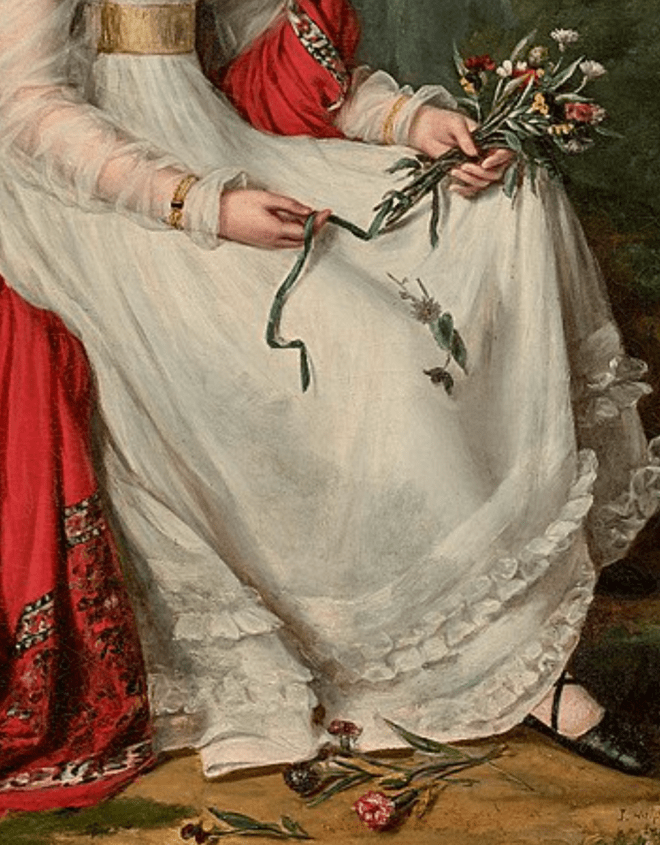
It was foolish and naïve for any woman to think that there was still such a thing as romance. Pure and unmitigated—done solely for the sake of romance itself. Pandora Zimmerman (who had frequently considered changing her first name) believed she had dispensed with such foolishness and naïveté long ago. Especially after so many years of being in a “domestic partnership” with Mark Burgess, a man seven years her senior. And yet, despite his “seniority,” he still didn’t seem worldly enough to understand that a woman, no matter what age she is, needs perennial reassurance. Oh sure, there are those “feminazi” types who like to declare that women are beyond—or should be beyond—needing reassurance from a man at this point. That to be in any way dependent on someone with a Mars symbol representing them was the ultimate weakness. The very form of weakness that so many female forebears had fought relentlessly against, whether through suffrage or forcefully rejecting the idea that the only thing women (well, white women, anyway) were capable of encompassed being a “house cat” a.k.a. housewife.
Pandora thought of these women often, probably more than the average “dame” or “dame”-identifying person. How much they all endured so that she could live as she did today. That is to say, “independently.” Theoretically free of the women’s former burden of looking to men for anything, let alone validation. But again, emphasis on the word “theoretically.” Pandora, at thirty-four years old, had grown no closer to ceasing her obsession with getting a man’s approval. Namely, the one she had been living with for the past seven years in what can be described as a “shack” (i.e., a modest one-bedroom apartment)—by Santa Barbara standards. In California, living together for a significant amount of time could potentially constitute some form of “legal partnership.” While in other states, the minimum requirement for “common-law marriage” could teeter near a decade of living together. With California, it was all about the “domestic partnership” though. One could register easily to gain essentially the same legal rights as married couples. It was not lost on Pandora that such partnerships were originally aimed at same-sex couples without the right to marry. And it amused Pandora that gay people should be so eager to model themselves after the straights, what with how abhorred the latter’s lifestyle tended to be. For as “square” and “uncool” as it had been branded. She could understand why. In the time since moving in with Mark, she had felt all sense of punk rockness being gradually drained from her body.
It started slowly, like most sinister things. In the moments when she found herself being so readily servile—doing the things that women were “expected” to do around the house. Chiefly, cooking and cleaning. Or when she noticed that, rather than going out on a random Tuesday night to “rage,” she started to give in to staying home and just watching TV with Mark. Numbing out together in what some call domestic bliss, and what others call domestic atrophy. It was in these small ways that she started to change. Except that she didn’t notice the change until it was already too drastic. Like, gained-too-much-weight-and-wearing-sweatpants-all-the-time drastic. Could it have been any wonder that Mark had lost interest in her?
And because he had lost interest so long ago, that’s what made it all the more surprising when he showed up after work one day bearing a single red rose (thorns and all). It might have been a cliche (all the more if he had chosen to buy a dozen of them), but the gesture was so out of the blue, so delightfully romantic that Pandora could forgive all cliches in that moment. And it was really no more than a moment that she allowed herself to be overtaken by sentimentality. However, after the initial orgasm (so to speak)/shock of his unexpected display of romance, Pandora came to her senses.
Let us pause here to note that, with a name like Pandora, it’s possible she was always doomed to learn too much information that would ultimately wreak havoc upon her world. That’s only part of why she shouldn’t have probed further about what “prompted” the flower. The other part was that, once she did, Mark shamelessly admitted that one of his students had given it to him out of “appreciation.” This additional tidbit about the flower’s origins made Pandora’s blood go from hot to boiling.
“Oh. I see,” she said coolly as she plopped the rose down on the kitchen table, a pathetically generic white purchase from Ikea. Maybe everything about Pandora’s life had become pathetically generic. And white—no, worse still, beige. This rose was just one more apex embodiment of that. No thought was put into it. No originality. The extent of Mark’s “romance” capabilities were, “Hey, I happen to have a flower I don’t want from a student—let me pass it along to the ‘missus.’” And of course Pandora didn’t even want to think about why a student might be giving Mark a red rose. She imagined that not only did he never talk about the fact that he was in a (supposedly) committed relationship, but that he had been giving off the “I’m the teacher you want to fuck” aura that was so often part and parcel of professorial narcissism. Particularly when the subject being taught was English literature.
Pandora was all the more bristled, too, because she had, indeed, been a student of Mark’s before. That was, quel choc, how they actually met. And while they didn’t start dating and, soon after, shacking up together until a few months after Pandora had completed his course, some small voice inside her insisted that maybe there was something predatory about him. Just because she wasn’t much younger didn’t make that any less true. Though maybe, at the time, she thought that it did.
With the receipt of this flower, it was like she was triggered. That a dam had been opened, a geyser had burst forth, etc. And with the rush emerged a revelation: Mark was not the man she thought he was. And he was certainly not a man who would bring her a red rose (or flowers of any kind) apropos of nothing. It had to be “convenient”—in other words, “pawned off” to a so-called domestic partner that he assumed “wouldn’t know any better.” Would automatically give him the benefit of the doubt in terms of believing he could do something so “amorous” without a reason. Or, in this case, without a “floral windfall.”
But what Pandora hated even more than his flower fakeout was that she had actually permitted herself to believe, even for one second, that it could have been genuine. For that is simply not a trait that men possess: guilelessness. And romance, in the end, was a construct initially created by men themselves (the only ones permitted to do much of anything back in the day) in fairytales and other false narratives of a literary bent. No wonder Mark was so adept at seducing women by teaching all about such literature. Literature that served as the very foundation for why someone like Pandora could still hold out hope, however fleetingly, for the grand romantic gesture.
Well, how’s this for a romantic gesture, she said calmly after duping Mark into thinking she wanted to fuck him and make up. But once she had gotten his pants down, she simply stuck the thorny stem of the rose up his urethra, giving him a taste of the old “Albert Fish self-flagellation” method. Not to mention a taste of the bottled-up rage he had unleashed with his phony attempt at sentimentality. So maybe now, one might say, Mark had become the Pandora of the situation.
 Literary Bitch