While Hawaii, to many, feels like an exotic, far-removed location that it takes a lot of coin to arrive at, for those living in California, it always felt like a stone’s throw. And that’s because it is. Well, compared to everywhere else. Leaving from SFO, it only takes about five hours and thirty minutes; from LAX: six hours. Being within reach of paradise is, in fact, just a matter of going in the opposite direction of New York (how telling). And it was so affordable, too. At least for the middle-class ilk aspiring to feel slightly higher class than they actually were. Though the Turners would never admit it, that’s precisely how they were trying to feel with their ultimately middle-class vacations to Hawaii. Though don’t try informing anyone who lives outside of California that it’s a middle-class vacation. To them, it’s for richies only. Adelaide Turner, Bob and Rita Turner’s oldest daughter, made the mistake of saying it once to someone on the East Coast and they practically tore her limb from limb. It was just further confirmation to Adelaide that she didn’t belong there.
She lasted about a year at Columbia before deciding to transfer to what had originally been her second choice: UCLA. Being closer to home (the Turners lived in San Francisco) meant that she could continue to partake of those middle-class family vacations whenever they occurred. After all, her two younger sisters, Emily and Mira, were still at home, with Emily starting junior high and Mira starting high school in the fall. The summer was wide open for an adventure. And so Bob and Rita planned a trip as usual. Once again to Hawaii. It had been about three years since the last time they had gone, favoring more “local” jaunts to places such as Yosemite and Bodega Bay.
So now, they reckoned, the moment had come to return to Hawaii. Specifically, Lahaina. That paradisiacal part of Maui that had become increasingly popular in recent years. Hell, even Britney Spears would go there. It was a wonder the first season of The White Lotus wasn’t filmed in those environs, but, alas, there was no Four Seasons in Lahaina. In this regard, it had remained untouched by white luxury. And yet, being that Lahaina was among the first destinations in Hawaii to be infected by the glut of Christian missionaries in the 1800s, perhaps its overall aura of being “overrun by whites” was inevitable.
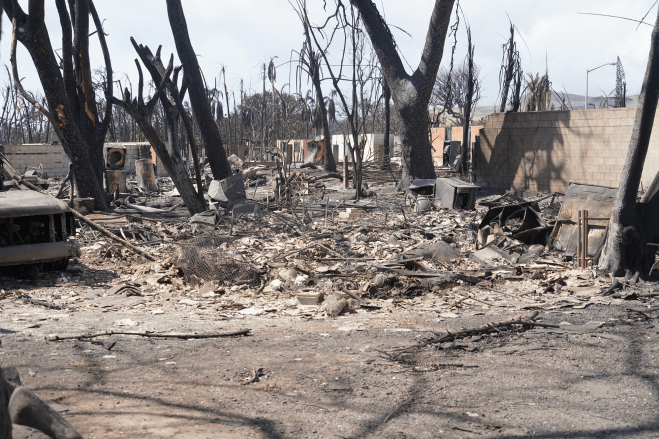
The Turners were just one of many families who touched down in Maui a few days before the fire in August. The one that wiped out the majority of the small but idyllic town. And while only one tourist was reported to have died among the over one hundred casualties, many were still forced to suffer its wrath. Out and about traveling the island when the disaster erupted, therefore ending up being shuffled to one of the many tents and temporary shelters that were set up for actual residents of the island to take refuge in. This is where the Turners found themselves—the bizarre dichotomy of snorkeling and parasailing one day and being thrust into Third World, apocalyptic conditions the next giving them a surreal kind of whiplash.
Adelaide probably dealt with it the most dramatically out of all of them. She found herself screaming and sobbing uncontrollably, demanding to be taken off this godforsaken island. How quickly paradise can turn to perdition. That’s what outsiders never seem to understand about island life. Sure, it’s all sunshine and “gnarly waves” when you’re only visiting during the presumed “best of times” of the summer. But reality creeps in real quick when you stay too long, especially in the current state of climate change chaos. There is no longer a “good time” of year to visit anyplace. It’s all a game of roulette now—and travel, more than ever, is less and less a privilege of the middle-class and more and more a privilege solely of the rich (like most everything else). For they can afford to defect from any location when they order the convenient evacuation provided by their private jet or yacht. The fundamentally broke and powerless middle-class vacationers cannot. The Turners could not. And their dream getaway had devolved irrevocably into a nightmare.
While the news enjoyed reporting on heartwarming stories of the community pulling together to accommodate one another with the most basic human needs (though not all governments would call them rights), the Turners watched something else entirely unfold before their eyes. All-out bedlam. If they thought Adelaide’s reaction was dramatic, it was nothing compared to the natives’ rightful wailing, as though they were being eviscerated. And they were. Unlike the tourists who saw Lahaina and Maui as their playground, this was their actual home. There was nowhere else they were planning to flee to. Nowhere else they could, even if they wanted to. But of course they didn’t. Because this was their home, no matter what state of disrepair it was in. So many people often wonder why residents rebuild in locations that they know are doomed to be destroyed again. New Orleans, Miami…Paradise (the small town in Northern California, that is). It’s because they cannot break free from the Sisyphean cycle caused by what it means to have a home. That it is very much about the place itself.
For Hawaiians, this unfortunate confluence of environmental phenomena—drought, dry brush, windy conditions fortified by a hurricane—would only intensify as the years wore on. But would they ever dream of leaving? Of course not. The Turners knew something about that as well. They were coming from a place that Don DeLillo had once described cruelly as follows: “Only a catastrophe gets our attention. We want them, we depend on them. As long as they happen somewhere else. This is where California comes in. Mudslides, brush fires, coastal erosion, mass killings, et cetera.” But this cauldron of natural disasters (and mass killings) was no longer centered solely in the Golden State. It was everywhere. And it was threatening the middle-class vacation. Of course, that didn’t mean anyone in power was becoming truly concerned about climate change. No, that would only come when the uber rich were affected—which, in truth, might be never. Money, after all, can be so clever with what it can yield, resource-wise. Resources that happen to be off-limits even to those who think they’re living like “kings” during that mirage called vacation.
When the Turners finally made it off the island—under harrowing, cutthroat conditions to do so—they did not speak of that vacation. Indeed, they never really brought up the idea of going to Hawaii again. The fear of Mother Nature had been permanently instilled within them, and they generally only went on “mini-breaks” going forward. Small, manageable weekend trips to towns like Santa Cruz and Tahoe…places you could arrive at in your own car. Catalina Island, of course, was a big no. They had major island aversion after what happened. But even though Hawaii had been taken off their own personal map, they did what they could to continue to get the most mileage, so to speak, out of what was left of their middle-class vacations before Mother Nature invariably decided to drop the ax on everything.
 Literary Bitch