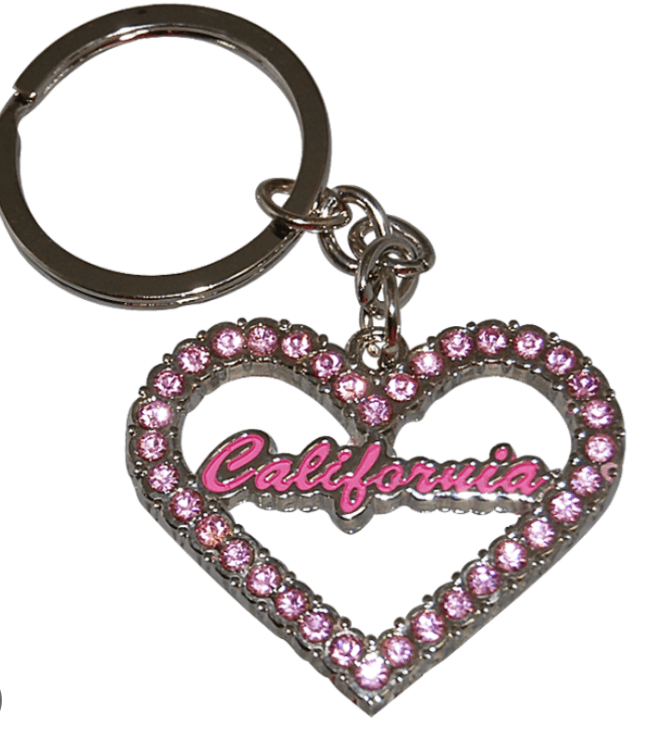
Maybe “normal” people can look at/come across a keychain without it sending their entire world into a tailspin. But Mackenzie Clein was not “normal,” therefore not one of those people. And though it wasn’t often that she came into contact with a keychain, whenever she did, it reminded her of the fact that she had absolutely no use for one. No set of keys to a car or a house or even a fucking storage unit that might prompt her to use one as a “cute” flourish. A flourish that said, in so many words (perhaps literally), that she had “personality.” Moreover, what, exactly, that personality entailed. Someone “playful”? “Serious”? “Sexually charged”? “Pop culturally attuned”? There were so many things that a keychain could say about a person. But first and foremost, what it said is that the person “sporting” one also had a set of keys indicating their level of “success” in the world. That is to say, that they owned (or at least rented) property of the vehicular or housing variety. Tragically, Mackenzie did not.
There had been a time in her life when she had been in possession of a car and an apartment, but it seemed so long ago now. In effect, she started out well enough. “On the right path.” The “straight and narrow.” But then things deviated. And it was one small deviation that led to another and another until, all of the sudden, she had turned into the type of person who had no need for a keychain. Because, again, she had keys to nothing. And if she did manage to get keys now and again, it was certainly never to anything “permanent.” They were never keys of her own that could warrant attaching a keychain to them. That would be much too presumptuous on her part.
In any case, it’s funny how just a few “wrong turns” on the road of life can fuck a person up for the remaining duration. Mackenzie had been foolish to assume that she could just “go on a bender” for roughly three years and expect that “proper society” would welcome her back with open arms afterward. As she quickly found out, that simply wasn’t the case. In fact, it was as though there was a kind of scarlet “A” on her chest. Or, more accurately, a scarlet “U.” U for unemployable. And each time she tried to fight that “U,” it was the same old spiel from every company, all wanting some kind of “detailed” explanation that would “account for” the “gap in employment history.” As though there should be something more to it than just: “I didn’t want to fucking work, and the only reason I’m trying to now is because I’m fucking broke.” But no, you can’t just spell it out like that. The “reason” must be shrouded simultaneously in intricate vagueness and meaning.
There were times when Mackenzie considered making up some sick relative—maybe a grandparent or aunt or cousin—that she nobly decided to take care of during her “gap years.” That her unwavering sense of altruism and goodwill was what kept her from working for pay. That she instead got “rewarded” for her work in non-monetary ways. But, when it came down to the moment of truth, she could never say such a thing out loud to her interviewers. She knew that she was too bad at lying and that they would catch her in it somehow. Trip her up with one false word and make her fumble enough to realize that her story was a cover.
So yes, Mackenzie had difficulty getting “back in the game.” She was able to finagle “odd jobs” here and there, but never anything lasting. Never anything that paid worth a damn. Which led her, more often than not, to rely on couch surfing situations or, if she was really financially lucky for a few months, to rent a cheap and questionable room. Other times, when things were especially dire, she relied on what women for centuries had in order to get by: her snatch. That would get her a free room for the night, to be sure. No keys were needed. Except, sometimes, the extra hotel key she was so “generously” furnished with. The few friends from “back in the day” that Mackenzie still kept in touch with often asked her why she didn’t just surrender to moving back in with her parents for a while. “You know, until you get on your feet again.”
Oof, that expression. “On your feet.” As though Mackenzie had been relaxing in a prone position this entire time (granted, there were the times when she was “hooking for lodging” when she had to be “prone” for those men who wanted to fuck a certain way, but that was rare—Mackenzie insisted). She knew the idiom probably stemmed from the visual of being knocked down by life or some shit, but it still bothered her. And as for the “simple” suggestion of returning to her parents’ place, Mackenzie never even dignified it with a response.
She already had to go back there once for a few weeks in a moment of peak desperation and that was all it took to remind her that the mean streets of wherever would be preferable. That stint was about three years ago now. It was then she decided to pack up all of her remaining items so she would never have to return again. It was then that she came across her old collection of keychains. Keychains that not only now triggered the fuck out of her “no property” inadequacies, but also still “said something” about who she was to this day, even if she had purchased them years ago. Some of them when she was in junior high. The primary motifs were I Love Lucy, I Dream of Jeannie, Bewitched, Marilyn Monroe and her home state of California (just as it was also Marilyn’s). What could Mackenzie say? She had always been an “old soul.” Other standouts included one that read: “Ground rules: don’t look at me, don’t talk to me, don’t touch me.” The same rules still applied, as far as she was concerned. Especially now that she had taken more frequently to sleeping on the streets.
The favors that Mackenzie had once been more easily able to call upon in her late twenties and early thirties were starting to become more difficult to enlist as she left that age bracket and entered what some might deem more “wilderness” territory. A period in one’s life when most other people had “settled down.” A.k.a. simply settled. Usually for something and someone they didn’t want. Or at least the younger version of themselves who once had higher hopes certainly didn’t. But, now and again, even though it was painful (mostly to her ego), Mackenzie fished out some of the keychains from her proverbial vagabond’s bag and squeezed them tightly in the palm of her hand, as though wishing and willing herself to be able to need them again. To somehow, some way—even though she knew it was already too late for a person like her—be able to have keys again. Keys to something that was her own. Particularly a domicile. No matter how shitty.
But no, that wasn’t going to happen. Like most people who found themselves increasingly down on their so-called luck (even if securing a job had less to do with luck and more to do with who you know/being able to convincingly lick asshole), things only continued to spiral downward…not upward. So all she could do was keep rocking back and forth with her keychains in hand—occasionally laying them out all around her as though they were little baubles to be proud of. And to her, they were.
This is how Mackenzie came to be known to those who passed her by regularly on the sidewalk as the “keychain lady.” Over the months and years, many locals would unload their own unwanted (billed as “extra”) keychains onto her as a token of their “solidarity.” Though, of course, in Mackenzie’s mind, she wondered why they couldn’t show such solidarity by giving her something she could actually use to get back on her feet (literally and figuratively this time): some fucking money.
 Literary Bitch