It’s not easy to be an Italian. Not in general and especially not when commingling with other non-Italians. The ones who really don’t seem to understand that food is life. It’s not just some trite saying. It’s reality. Or it is to most self-respecting Italians. Even the ones who haven’t hit the double digits in their age yet. Including little Simona, who was placed in the American after-school program (a glorified daycare, really) against her will and for the sake of forcing her to “assimilate” faster. At six years old, she had been hard-pressed to learn English with a more “native” sound for the past two years since she’d moved to San Francisco from Florence (what some might call a sharp fall from grace). But, for whatever reason, Simona still mostly spoke Italian. Both at the Scoula Italiana she attended in North Beach and at home, where her parents tried their best to avert “crippling” her by speaking in their own language. But now, things were starting to become untenable for her parents as it seemed that most of the other native Italian students in her class were having a better time at learning and speaking English.
Not wanting her to “miss the boat” (no Ellis or Angel Island pun intended) on her prime “soaking up language like a sponge” era, Simona’s mother, Lina, implored her husband, Adriano, to spend some of his overstuffed paycheck on a private after-school program that would help—nay, force—their daughter to better understand English…the language that was to, sooner or later, take dominance over her mind. Unless, of course, she decided to run right back to Italy upon turning eighteen, biting her thumb at both parents with far more fervor than Sampson did in the opening scene to Romeo and Juliet (which perhaps ultimately proves that the Capulets were at fault for everything).
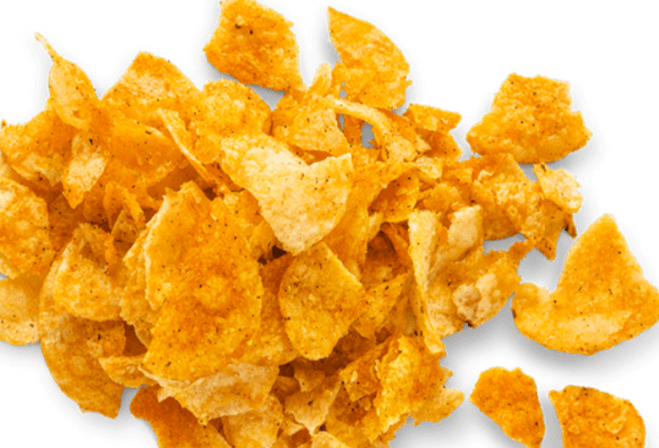
Even if that were the case, that day was much too far off to console Simona now. Pressured and prodded as she was to learn, to integrate. Yet it was difficult to feel compelled to do so at an after-school program that served nothing more than stale chips and popcorn as some sorry excuse for a “snack.” And when Simona was presented with a handful of that staleness on the first day she was there, she realized how foolish she had been to believe that it might actually be exciting to have access to such “junk food.” Of the variety that she was never permitted to consume at home. One bite of this schifezza, and she was cured of all previous convictions that she might be missing out on something when it came to her parents’ effectively barring her from American “food.”
With that being her first indication that the after-school program was not going to be in any way conducive to convincing her she ought to start letting go more of her heritage, Simona sort of “turned off” after that instant. Especially as she looked around and saw how eager and contented the other children were to chew this cud. Did they not know? Did they not understand? How could they all have been so maleducati? It’s not as though San Francisco was like most other American towns, after all. Wasn’t there supposed to be some higher caliber of knowledge about the importance of good food? Even if under the false pretense that, in America, you were “bougie” if you cared about such things. Nay, had the money to care about such things. Because yes, part of the reason most Americans were so “chill” with eating slop stemmed from the fact that it cost too much to not be chill with it. Just another way in which the “greatest country in the world” was a thinly veiled hellscape: you had to be rich to afford unprocessed food.
Simona was slowly letting the cruel, un-nurturing characteristics of American “cuisine” sink in. And it made her cry. Out loud. For several minutes that first day at the after-school program. And part of what made it impossible for her to hold back those tears was the revelation that no other child in the program “got it.” They had all been brainwashed from living their lives in the U.S. since day one. They knew nothing else; they knew no better. And it terrified Simona to think that she might become just as conditioned to view such food was “normal” if she spent too much time here. While the other kids stared at her with glazed-over expressions that indicated they couldn’t possibly fathom the root of her sadness, Simona did her best to dissociate. To float up out of her body and back to Italy, where even the shittiest food was “gourmet” compared to the absolute dregs they tried to pass off as “nourishment” in this country.
Although the after-school program instructor wanted to believe that she had been the one to calm Simona down, it was, in truth, a combination of self-soothing and fantasizing about the dinner her mother would make for her later that got Simona to step back from the ledge, so to speak. But the thought of coming to this place every day and enduring these kinds of pathetic excuses for “snacks” was more than Simona could bear. And if she dwelled on that notion for too long, she might actually never stop sobbing. So she powered through that “inauguration day,” taught how to do such puerile things as make a “house” for a figurine using nothing more than the materials she could gather from outside the building. The whole thing was weird and unsatisfying, and all she wanted was to get back home. Her real home, in Italy.
As she grudgingly gathered a pile of sticks and leaves, Simona cursed both of her parents for bringing them to this strange land, where nothing made sense and the rules were as arbitrary and infuriating as anything out of a Kafka novel. And for what? More money? A “better” life? That was bullshit. They were fine as they were in Florence. But no, Adriano had to go seeking greener pastures, finding a job in IT that paid “oodles” compared to what he was getting in Italia.
No one had asked Simona what she wanted. It was just assumed that, as a child, she had no agency. And maybe, technically, she didn’t. But to underestimate her will to evade doing (or eating) things she despised was a huge mistake on Lina and Adriano’s part. For when Lina arrived to pick up Simona, the director was both horrified and embarrassed to inform her that Lina’s daughter had disappeared at some point during the activities, and that they had already notified the authorities. No one felt that Simona was “worthy” of an AMBER alert, since the possibility of abduction didn’t seem likely in this scenario. Everyone, instead, surmised that Simona had simply not “taken to” the after-school program and decided to leave of her own volition.
Too frantic to be angry or irritated with Simona’s temporary custodians, Lina ran out of the building and began scouring the streets herself. Eventually, she found Simona sulking outside a chintzy Italian deli; still looking so upset likely because it was a cheap imitation of the real thing. Which, short of her mother’s cooking, Simona could only find again in Italy. That is to say, food that didn’t blow chunks (therefore, make her want to blow chunks).
Relieved to see that her daughter was okay, Lina approached her with an aura of sympathy and tenderness. Walking her to the bus stop they needed in order to get back home, it was soon agreed upon that Simona would not return to the after-school program. And that made Simona smile. Because if she could negotiate this, then perhaps negotiating their return to the motherland wasn’t far behind.
 Literary Bitch