In contrast to most people, Renata adored having jet lag. It was like a hack for finally being able to wake up as early as possible and experience the blissful quiet of those “small hours.” That brief period of the day when it felt like the world went quiet and one could actually think. Uninterrupted and unbothered by all the background noise that started to activate by six and seven o’clock. And it was during a rare scenario such as this that Renata could understand the aura of superiority that “morning people” always seemed to have. The way they looked at late risers with smug judgment, viewing them as “lazy” and “good for nothing.” Maybe there was something to their smugness after all. For Renata never felt so accomplished and ahead of the curve as when she had been up for five hours and it was still only eight o’clock.
Of course, in order to secure this kind of jet lag at its finest, she had to go from east to west (though most people tended to experience jet lag more profoundly when going from west to east). Which is what Renata often found herself doing, traveling from Milan to Los Angeles at least once a year to visit her brother, Gianpaolo, who had been living in Westwood for the past fifteen years and had no intention of ever setting foot in Italy again. And since he also had to go and have three kids—two boys and a girl—Renata, wanting to be a good and beloved zia, couldn’t very well avoid being the one to capitulate to becoming “The Visitor” between them. What could she do? He was the last of her immediate family, with both their parents dying the same year in a funicular accident in Genoa, where they had gone for a weekend trip to take in the sights and see an opera at Teatro Carlo Felice. It was, in fact, ever since their death that “John,” as he chose to go by now that he lived in the U.S., refused to return to Italy, insisting that it was too painful for him.
Meanwhile, Renata was the one who lived with their ghosts every day by taking up residence in the apartment they had left to both children, but that John had no interest in claiming. This, of course, might have been a blessing, since things between siblings do tend to get quite ugly when inherited property is involved. And Renata had to remind herself of that every time she found herself rolling her eyes about booking yet another expensive plane ticket to go to John’s “neck of the woods.” At least he wasn’t always there, as he would have been had he chosen to “collect” his half of the inheritance. Instead, all John asked for was an occasional “donation” to his coffers to help support his children when an unexpected expense came up. To Renata, it was more than a fair trade.
His wife, Laura, however, was not of the same mind. Hopelessly American in her cultural indoctrination, she couldn’t understand the Italian philosophy behind family and/or sharing wealth. To her, Renata was some kind of swindler, taking advantage of her brother on both sides of the Atlantic. On one side, by “stealing” his rightful property from him and, on the other, by rolling up to his house in Westwood for anywhere from one to two months at a time, coasting on the free lodging to extend her stay in a manner that most others wouldn’t be able to. It seemed to Renata that Laura was determined to despise her from the start, no matter what. Maybe that was to be expected considering Laura was a natural “morning person,” required no “jet lag hack” to be as such. It was easy for her to regard someone like Renata as one of those lazy good-for-nothings that couldn’t legitimately wake up before nine, if that.
Ultimately, Renata proved herself to be “of that (deadbeat) ilk” once the jet lag finally did wear off after about a week. No longer able to hide that element of herself, she was powerless against Laura’s daggery looks as she descended the stairs still in her pajamas around nine-thirty, ten o’clock. Though, to be fair, she had stayed out or up late most nights, and felt that waking up this “early” ought to be considered a feat rather than a failure. But no, Laura would never see it that way, would never see Renata any other way than as some kind of freeloader. Even though she was constantly offering to host John and Laura in Milan. Laura would only purse her lips at the suggestion, while John continued to reiterate that he would never come back to Italy again. So it was that Renata left the offer open to her nephews and niece once they were old enough to make the trip (Laura and John were of the belief that it was a waste of money to send them before they became more “sentient,” perhaps when they were teenagers—though anyone familiar with teenagers knows they aren’t sentient at all).
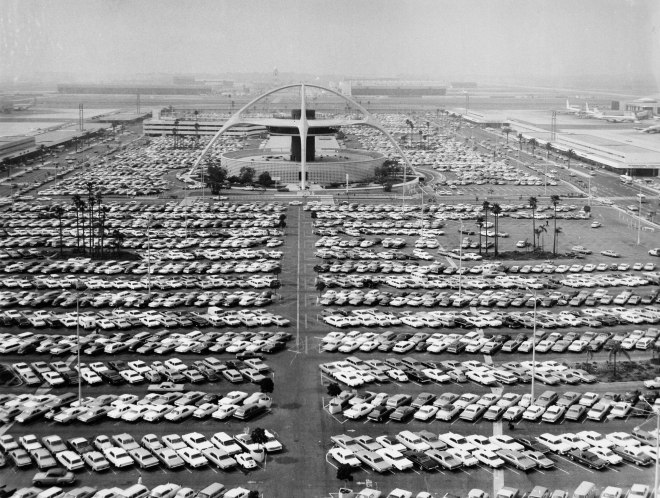
Caleb, Easton and Tamara (those American names a disgrace to their heritage, Renata thought) didn’t express much enthusiasm over the prospect. At six, four and eight, respectively, maybe it was difficult for them to process that most people went apeshit over the idea of going to Italy. That, for many (particularly Americans), it was a lifelong dream to see some part of it. But Renata would keep trying. Not just to remind John’s children that they were half-Italian, but to impress upon them the beauty of her country. A beauty that did not exist, as far as she could tell, in the United States, which the colonizers’ ancestors (de facto, the colonizers themselves) had eventually seen fit to turn into one giant strip mall. It was thoughts such as these that began to wane the longer she remained on “Pacific Standard Time,” soon replaced by less “recherché” musings once her circadian rhythm at last got in full sync with the time zone. Because, without that “total silence” she got to enjoy during the small hours, waking up anywhere between three and five a.m., Renata’s mind quickly became less, shall we say, zen, therefore less roving.
So now, instead of ruminating on things like the beauty discrepancies between Italy and the U.S., she would instead focus on thoughts like wanting to bludgeon Laura with the coffee pot every time she gave her that judgmental glance for showing up in the kitchen past a “morning person” hour. Or how she wanted to bash her own head against a wall when the children were bopping around and making their general “children noises” when she had just woken up circa nine-thirty and was only starting to reorient herself to the idea of other people existing, let alone children.
By the end of her sojourn, Renata was always relieved to be returning to Italy, and wondered how “John” could possibly be happy—or even “satisfied”—living in a place that was so antithetical in every way to where they had come from. She supposed that, to him, having presently adopted the cultural values of an American, this was “none of her business.” Even though, as an Italian, Renata considered everything her business, particularly family. And as his older sister, she would remain perennially concerned for and protective of Gianpaolo (or what was left of this part of himself). Though not enough to move close by.
So it was that, just once a year, she could travel “through time” in order to become that rare breed: a morning person. Yet when she looked at bona fide morning people like Laura, it dawned on (no pun intended) Renata that maybe you had to be a Type A asshole in order to be someone who didn’t want to kill themselves or someone else as a result of waking up early. As for her return to Milan, she found her adaptation to the time zone there almost instantaneous. Perhaps a testament to her body telling her that she was back where she belonged.
 Literary Bitch