If you looked around closely at anyone, it was easy to see that they were all victims, in some way or another, of the adage, “My body is a cage.” Whether old or young, it applied. In the more “aged,” of course, it was easier to see the signs of imprisonment, but it’s not as if the “youths” were immune either. They were at the mercy of their body in other ways. Convinced they had to look a particular way for the camera that was continuously on. This feeling of theirs that they had to constantly be “live” (therefore, “primped to the max”) was the foremost contributing factor to why their body was a prison. Subjected to the nonstop rigors of adhering to what was trending (whether ultra plucked eyebrows for girls or chiseled jawlines for boys [ergo, taking a hammer to their own faces to make it so]).
As Colette walked through the park—an incongruous sprawl of occasional patches of green amidst a concrete jungle—she could see all of this imprisonment, across generations. As for herself, her own bodily sentence was recently plagued by an allergic reaction to a cream she had put on to relieve the muscle pain surrounding her knee. Which she was experiencing more frequently than in the past despite doing nothing to alter her usual exercise regimen. One that consisted of a swim at her local indoor pool in the morning and a thirty-minute run in the evening when she got home from work.
But she had dispensed with those activities of late in favor of the less physically rigorous option of lumbering through the park by her apartment. A five-floor walk-up with no elevator. This in and of itself felt like a workout to her the past few weeks. For Colette noticed a shift in her usual “agility” at the beginning of the new year, when it was already challenging enough to be motivated to get out of bed, let alone get out of bed to work out. Adding aches and pains into the mix did not assist on the “inspired to move” front. In fact, this latest “update” to her body was making her feel far more decrepit that someone of her age ought to. She was still in her thirties, after all—even if not the “early” side of them. But being inside of a decade was being inside of a decade, was it not? She couldn’t stand the people who felt “obliged” to round someone up into the next “bracket” just because they were living their “back half” years of a current one. As far as she could tell, the “motives” for doing this tended to be for the sake of cutting another down to size. To remind them that they oughtn’t get “too comfortable” being considered young, because that ship was going to sail far sooner than they could possibly imagine.
And maybe it was this type of collective energy, so regularly being funneled in her general direction, that had caused this “mystery pain” in the first place. As if all these people, whether they were ones she knew or merely orbited, had felled her with their fundamental negativity about age, vitality (not to mention their inherent jealousy of how “in form” she was). Pushing her into the next “age box” too soon. With her body reacting to that energy accordingly. Betraying her when she had least expected it. Not that, frankly, she was ever going to expect it. Especially since she had always been so religious about her health and fitness regimen that being “infirm” was the last thing on her mind, something totally nonexistent on her “thought radar.”
That first day in early February when the strange pain came—a pain that she knew was fundamentally “different” from what she had previously experienced as a standard muscle ache—that was when it started to get on her thought radar. Yet she kept trying to push it aside, to write it off. To insist that it would just go away, as pains of this nature had always done in the past. It had never occurred to her that she would have to live with the pain “forever.” In other words, until the end of her life, which could be long or short, depending on how “fate” wanted to play it. And, depending on how one looked at it, maybe a shorter life would be better with this kind of perennial pain, which was sure to only grow more debilitating with each passing year. Though the doctors and the physical therapist assured her, when she was at last staring them down after a full month of pain, that life could be manageable. It was just going to be a matter of “working at it.” Constantly, daily. But the thing was, Colette thought that “working at it” was already what she had been doing for all this time. Ensuring, each and every single day, that she did something active so that her body would not fail her.
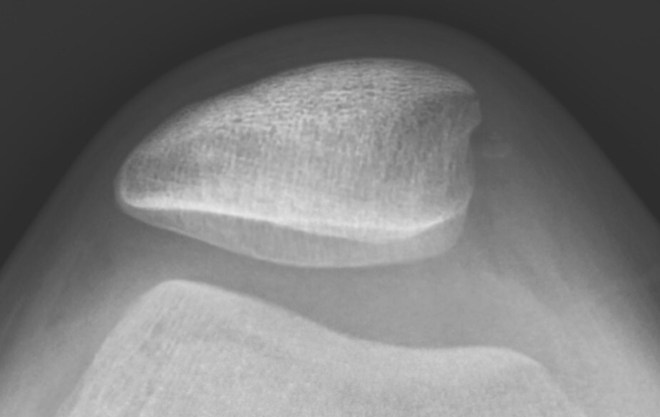
Ironically, though, it was precisely because she had been so active that the condition currently plaguing her had ultimately arisen. That condition being patellar chondropathy. In laymen’s terms, due to her longstanding active lifestyle, all the cartilage beneath her kneecap had been worn down to the point where it was now causing joint effusion. That was the result of the cause, but not the “thing” itself. And the thing, now, was that she had, bluntly, arthritis and no cartilage. But it would be “fine,” the specialists assured her. “Fine,” however, didn’t mean that she would ever manage to get back to her “old ways”—not now that her own body had branded her as “old.” It meant that all the sports and activities she had once enjoyed (save for swimming, which was “low impact”) were essentially off the table to her. That is, if she didn’t want to cause further damage to her knees.
What the hell did I bother for? she asked herself after she had finished changing in the bathroom of her physical therapist’s after the first session. Colette couldn’t fathom the dichotomy of how “staying fit” her entire life had managed to result in being unable to act or look fit at all “going forward.” How, at present, instead of reading as a person who was healthy and active, she was going appear more like someone rickety and rundown. Tried as she did to still “look normal” while walking up a flight of stairs. But it was impossible. The pain was too great for her not to hobble as she clutched to a railing and went so much slower than everyone else who passed her by. Even some of the real old ladies.
Oh, how she envied those who hadn’t been foolish enough to be “sporty” during their adolescence and twenties. They would get to enjoy their “old age” in the future because of that laziness, that flaccidity. Colette rued the day she had ever been conditioned to be an overachiever. To strive for “excellence.” But what was going to be “excellent” about her now? With this albatross to bear for all her remaining days? This “defect” that couldn’t be rid of but only “tempered.” Was there any point to keep trying? To go on living this way when it was so…limiting? Walking out of the park as she overly examined these questions, she caught sight of a runner bouncing by her as he ogled her. Well, at least she was still “passing” to some as a “spry” woman. But that “compliment” didn’t stop her from smiling to herself when he tripped over his own foot as a result of staring at her. When he fell onto his knee—hard—she wiped the smile off immediately and went to help the poor sap.
Staggering toward him, Colette asked, “Are you okay?”
The man gritted his teeth and put both hands over his bleeding knee. “Fine.”
Colette wasn’t convinced, imploring him to show her the wound—even going so far as to lie to him that she was a nurse and could therefore “advise” him. That was enough to persuade him and when he moved his hands, Colette knew she didn’t need to be a nurse to see that he was, well, fucked. His bone was sticking out. Jesus Christ, how hard had the fall been? To look at him, you would genuinely think he wasn’t in that much pain at all. But to see the reality of what his knee looked like, you knew that he had to have been in agony—even if the adrenaline was still pumping forcefully enough to mitigate some of that suffering.
Refusing to take no for an answer, Colette called an Uber (when the man forbade her from calling an ambulance) and accompanied him to the hospital. She did feel partly responsible, after all. And when she told him as much with a blatantly joking air, he didn’t refute her statement. At the sign-in desk (because, yes, you still had to “sign in” even in an emergency), Colette finally learned that his name was Martin. While they were waiting, she also learned that he was an avid runner and worked at a startup company that aimed to “disrupt” the gay dating app scene with its own supposed “hot take” on the model. Colette didn’t bother probing for details about how the provocatively titled “Fag-It” was going to be any different from the likes of Grindr, Scruff or Growlr, save for the fact that they were trying to compare themselves to Tinder by using the gay word for “kindling” (even if woefully misspelled for the sake of a bad pun). She did, however, ask if he himself was gay, wondering if she had misread his intense eye contact completely.
Martin assured her that, no, he was not. He just happened to be an ally. Which made him suddenly seem much hotter to her. Yes, she was seeing him in a new light entirely. Not just as some “corporate runner guy,” but maybe as someone who genuinely cared about people and causes as opposed to money and having a hot body. So she decided to wait for him while he was at last admitted into an examination room, whereupon he was told they would need to perform a “mild” surgical procedure that would only require local anesthesia (though he was welcome to opt for the general kind, if that was his preference). Afterward, he would of course need to go to physical therapy to help with rehabilitating his knee, which would likely never be the same again, but one could “hope” it “might” be.
Colette learned that Martin was the same age as her—thirty-seven—when the two started going to the same physical therapist together. This because Colette felt obligated to give him a recommendation, to make the process more seamless for him. Though, really, because she wanted an excuse to get to know him “organically.” And also, non-committally. For if it turned out she didn’t much care for him, then she would just find a different physical therapist to go to (even though she quite liked this one). But over the course of a few sessions, Colette could tell she was starting to fall for him, despite her initial, er, knee-jerk reaction of being repulsed by him. By his quintessential male leer.
But now, her initial impression had been disproven as the two were spending more and more time with one another even outside of physical therapy. At first, it had been an excuse to say they were “using” the other to “stay motivated” about healing. However, it didn’t take long for them to stop lying to themselves and finally “consummate” their sexually tense dynamic. Done in a manner they both deemed “low stress” for their respective knees (which, as one could imagine, still involved some rather acrobatic positioning), each managed to achieve what they would internally call “the most intense orgasm of my life” (though they wouldn’t say that to each other out loud, therefore, would never know how much they truly thought alike). And from that day forward, they were bound to one another not just by the knee trauma they shared, but the sex they couldn’t get enough of. Particularly since both had empathy about securing the exact right position for each person’s knee comfort level while “fornicating.”
In the years that followed their fateful meeting that day in the park, Colette would wonder if her knee issues were all part of some grand design to ensure she would not only “find” Martin, but have such an affinity for him due to their shared pain on the same part of their body. And while Martin, if he was a pettier, less evolved person, could have tried to blame Colette for what happened to him, instead, he, too, viewed it as some kind of blessing in disguise. An “it must be so” moment that led them to one another.
On their fifth anniversary, Colette got him something of a “joke” gift by purchasing a very expensive (ergo, very deluxe) knee brace to go with her handmade card that read, “I (K)need You” on the inside, with a drawing of a forward-facing bent leg with a kneecap in the shape of a heart. She couldn’t wait to give him the present, expecting him to be home earlier than usual so they could celebrate. But when an hour had passed after his usual time of arrival, Colette started getting anxious. He hadn’t responded to any of her texts in the past two hours, which was extremely unlike him.
In panic mode, she marched back and forth across the same stretch of floor in the living room of their apartment. And while Colette kept debating whether or not she should call the police, an abrupt knock at the door interrupted her thoughts. When she rushed over to open it, assuming it had to be Martin, she nearly fell to the floor when she saw that the police had come to her. Two officers stood there at the threshold, waiting to inform her that Martin had been in an accident. More specifically, mowed down by a car when he entered the crosswalk near his workplace. The kind of crosswalk that had no red or green pedestrian light, but was simply marked with white lines that “allowed” the pedestrian to enter it at their own discretion, asserting themselves in a way that forced the oncoming traffic to stop. Except that, this time, one car chose not to. Played a game of chicken they had won, which meant Martin lost. And lost his life as a result.
Although she gathered her composure long enough to convince the police she was okay so that they would leave, Colette knew she was never going to get over this. Considering she had already been contemplating suicide when she found out about her chondropathy, and that Martin had ultimately saved her from going through with it, there was now nothing holding her back from doing what she had originally been thinking about five years ago.
In the bathtub that night, the candles lit and the wrists slit, among her final thoughts were gratitude for the last five years. At least she had that time at all with someone who understood. Someone who “got” her pacing in life, literally and figuratively.

