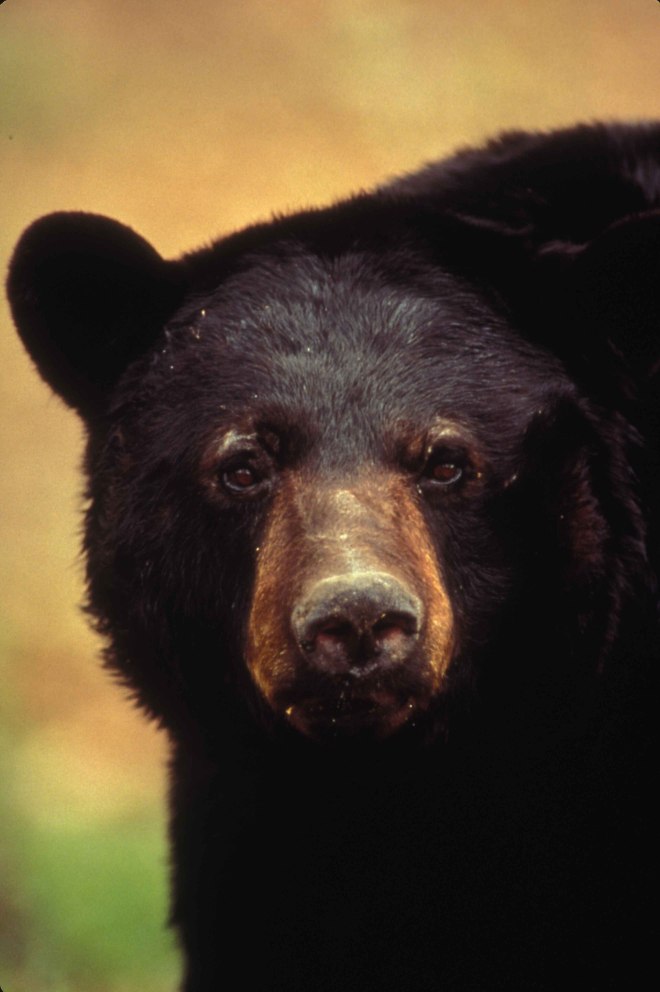
The bears had been gradually taking over for a while now. The hotter and more insufferable it got, the more they closed in on the many swimming pools just ripe for the taking (or, in this case, for the dipping). Especially in the various suburban neighborhoods of Los Angeles, where having a pool seemed to be as “ordinary” to the residents as having a refrigerator. It was also ordinary to just about any human being to have their home built in an area that encroached upon the natural habitat of these bears. And there was no more prime an example of that than the foothills of the San Gabriel Mountains, where “bedroom communities” like Monrovia, Sierra Madre and Pasadena bore the brunt of bear sightings right in their own backyard. Except that the phrase “bear the brunt” (no pun intended) suggested that they were being put upon by these animals when, in fact, it was the other way around.
However, there existed at least a handful of residents that understood they were, for lack of a better term, the assholes in the situation. After all, they were the ones who had the audacity to build into territory that black bears had made their home for decades, when the first few were transported there from Yosemite by the California Fish and Game Commission in 1933. More specifically, eleven “troublemaker” bears were transferred, like inmates, to this part of California. Not just because they were no longer wanted in Yosemite, but because they were intended to fill the predator void in the ecological system that had shifted when the grizzly bear went extinct. The last one in the San Gabriel Mountains shot by some twat hunter in 1894.
The plan to fill the void with these “bad seed” black bears was that of J. Dale Gentry, the affluent chairman of the aforementioned Fish and Game Commission. Whatever Gentry said went in a situation like this, and so the transfer was made. No one seeming to point out the irony that the only reason grizzlies went extinct was because of the human population increasing in their area. A population that saw fit to murder them in cold blood because they were viewed as a threat. Or, more often than not, just for the “sport” of it. Worse still, grizzly bear meat was a staple on the menus of restaurants and diners in and around San Gabriel in the mid- to late 1800s. So it was no wonder the grizzly didn’t stand a chance against the greatest apex predator of all: man.
Black bears might not be hunted in the same cruel way as the bear breed they replaced, but they still suffer from humankind’s careless actions. So, if a resident really thought about it, offering up a pool for these bears to cool down in during the increasingly intense heatwaves of the summer was honestly the least they could do. Especially since the heatwaves were also humanity’s fault, destroying Earth’s climate and natural order in just a few centuries after embracing the kind of capitalism that the Industrial Revolution solidified.
Jeremy Paulson was of this exact mind when he decided that, rather than trying to “shoo” away the mama black bear that started to enter his yard with her trio of cubs, he would simply accept them. “Allow” them the luxury of enjoying the pool that his decades of hard work had built. Indeed, Jeremy had moved to Monrovia to retire after spending years working for the tech industry in Santa Clara. Many of his coworkers couldn’t understand why he would choose, of all possible locations, Monrovia as the place to live out his retirement years, but Jeremy had given it a lot of careful consideration and decided it was the best milieu for what he wanted out of the rest of his life: peace and quiet—with a dash of wildlife. Some reminded him that he could have gotten that in a lot of other towns in California, but Jeremy was adamant that it had to be Monrovia. Which is why he went about saving up to buy this 1.3-million-dollar property the moment he started working at Tech Corp.
Now, all these years later, he was living his simple dream, sprawled out on a chaise lounge and soaking up the sun with a homemade Hemingway daiquiri. And that was the moment when he first heard Leila, as he would come to call her, splashing around in his kidney-shaped pool. When the two locked eyes, Jeremy honestly couldn’t believe what he was seeing. It was as if he was beholding some kind of miracle. And then he remembered this miracle could tear him limb from limb if she wanted to. But she didn’t. It was plain to see she meant no harm, and was only looking for a place that might offer her some respite in this abominable heat.
While Jeremy had come out to take a dip himself that day, he surrendered the pool to Leila, who took it as a sign that she could bring her cubs along for the next “pool day,” which would turn out to be pretty much every day for the rest of the summer. Not that Jeremy minded. It’s not as if they did anything “impolite” while they were swimming, like, say, taking a shit (he could not say the same for his three-year-old niece when she came to visit with his sister). And though he would have liked to swim a bit more himself, the joy of seeing them in there every day was worth the sacrifice of his own “leisure time.”
Some of the neighbors were just as ecstatic to be in close proximity to such a wonder of nature (especially when the videos they posted of it went viral). Others were more uppity and unwelcoming. But, historically, that had always been the case in this part of Southern California. To be sure, from the moment “Gentry’s bears” were introduced to the land, many of those who lived on it started to blame him for bringing a so-called vicious predator into their midst. In fact, the contentiousness between the factions who saw the bears as causing no harm and those who saw them as monsters to be feared came to a head with a legal skirmish between Gentry and William Bristol (best known, perhaps, for establishing the Acorn Lodge in Wrightwood). It was the latter who killed one of two black bears in 1934 after they were caught pilfering some outdoor refrigerators in Wrightwood. Which, again, is only a human’s fault for not “bear-proofing” that which they consider their “property” (as if Mother Nature can ever truly be “owned”).
In addition to trying to take legal action against Bristol, Gentry also wanted the District Attorney to charge the other shooter, Clyde Steele, with the crime of killing these innocent bears. Yet people like Bristol and Steele blamed Gentry for introducing them to the neighborhood, so to speak, in the first place. In the end, the DA didn’t charge either of these cold-blooded killers, and Gentry was ultimately strongarmed out of his position as the chairman of the Fish and Game Commission. This particular dust-up would set the tone for the ongoing battle/school of thinking on black bears in San Bernardino and Los Angeles Counties for years to come.
But as far as Jeremy was concerned, if these bears so playfully and happily swimming before him in his backyard were the “bad seed” descendants of the original eleven black bears brought in from Yosemite, well, maybe they weren’t so bad after all. Just misunderstood. And painted as villains by humans as a means of projecting their own nefarious nature onto others.
 Literary Bitch