Julian, who, at twenty-three, subscribed to being of a “youthful age,” still couldn’t occasionally help but sympathize with his elders. Mainly because he seemed to be among the few of his “kind” that stopped to think about how it surely must be more challenging (a.k.a. intensely annoying) to be around “youths” as an “adult” in the present than it ever was in the past (not to mention that, in the past, youths had far less clout and, hence, far less of a propensity for being scary). After all, many youths of the past were capable of not only sitting still and not screaming randomly in public, but also not blasting some atrocious form of media sans headphones as if all the world was their private living room. And, to them, it might as well be. For it’s not as if they were raised to behave with anything like “respect for others,” let alone raised at all, since most parents “nowadays” simply left it to a child’s phone screen to “rear” them, no headphones necessary. Clearly.
And sure, Julian got it. Why should “kids today”—himself included—have respect for anyone or anything when those who came before them obviously didn’t have enough respect to leave behind a planet that might be even remotely sustainable for future generations? What’s more, “kids today,” if they had any decent arguing skills to speak of, could argue that the adults who came before were the ones who “made them this way,” set them up for this kind of cognitive disaster/failure, by inventing these technologies just in time for their formative years.
Yes, blame everything, including consumerism as it relates to environmental collapse, on boomers. With this, the “latest” generation, but a reflection of all the mistakes they made. All the lack of foresight they had in opening this Pandora’s box filled with the evils of technology that would turn subsequent minds to mush and obliterate all sense and/or remaining shreds of decorum (and in the process, vindicate the Unabomber).
So if the “current” generation of youths could blame their forebears for that, then the generation just before the “current” one could also find fault with baby boomers and anyone else who came before them for not comprehending how vexing and ill-mannered their “innovations” would render the “youths of today.” And yet, Julian’s slightly older brother, Brandon, who was of the generation that had, only about seven or eight years ago, still been considered the “current” one, had nothing but contempt for the generation after him—Julian’s generation. Choosing to ignore any potential “root cause” for their uncouth behavior (and uncouth in ways that were far more vexing and barbaric than any of the youths that had come before them). Instead, all Brandon could do was complain and find fault about how awful it was to encounter anyone Julian’s age in a public setting, when one was essentially trapped with their unique brand of boorishness. For Brandon, the height of that boorishness was the whole “blasting whatever was on one’s phone” thing in spaces that were meant to be shared. It got under his skin like nothing else could.
And whenever he got home from his day of riding public transportation (or being in a shop or on a street or in a movie theater or even in a library), rife as it was with youths squawking and blasting media like they should be in a goddamn rest home where one would expect to find such decibels at play for the hard of hearing, he tended to take it out on Julian. Seeing him as a “representative” for his entire generation despite Julian being much more aligned in worldview and temperament to baby boomers themselves. Yet there was no convincing Brandon that Julian—his own flesh and blood who he was supposed to know well…or at least better than most—wasn’t just another “no-good punk.” To borrow the kind of term that perhaps a scandalized Clint Eastwood might use.
In response, Julian had long ago given up on trying to convince his brother otherwise. Of relating to him in any way, shape or form. Even though, technically, they weren’t enough years apart to act so distant toward one another. As if they truly had nothing in common. At the same time, that’s how much things had shifted. How much more accelerated time—therefore, perspective—felt between the generations now. It used to be that a hundred years could go by and not that much would change—at least not too drastically. Which is why generations old and young alike could still somewhat relate to one another.
In the present, however, it felt as if a whole century went by in the span of a decade, with the “acceleration of everything” phenomenon being fueled by the internet, the information-action ratio and an increasing reluctance on the part of each new generation to even bother staying “in touch” with the past. Or acknowledging that, in some way or another, it is always present. No matter how “remote” or “irrelevant” it might appear on the surface. To Julian, who was more intelligent (and thus, had greater cognitive abilities) than most people in his birth cohort, this was obvious. To someone like Brandon, who could look at things solely through a “straightforward” lens, the only thing that seemed obvious was that Julian’s generation was a lost cause. And ought to be interacted with as minimally as possible.
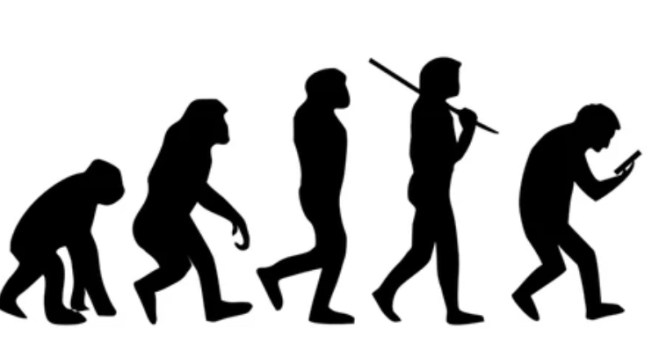
Unfortunately, avoiding his brother’s generation wasn’t a likelihood. Not just because he lived under the same roof as Julian—specifically, the roof of their parents’ house (Brandon had been forced to move back, while Julian had never left at all)—but because every time you set foot onto the street, there they were. Teeming. Overrunning. Speaking their gibberish. As if they had nothing else to do and nowhere else to be. Maybe they didn’t. Maybe their lone purpose in life was to serve as karma for the generations that had come before them and actively worked to “create” this one with their economic and environmental “philosophies,” and their so-called technological advancements that only seemed to make humanity devolve into something far less intelligent than any member of the Homo habilis tribe. At least they knew how to work with their hands.
The same couldn’t be said of humans in the twenty-first century—unless one really wanted to count touching and fiddling with a phone screen as “working with your hands.” Which, of course, “one” did. Those ones being part of all the living generations now. And perhaps in that sense alone, the generations did remain connected to one another. Through their disconnectedness.

