She had been a star for most of her adult life now. So it still surprised her when she encountered someone who didn’t recognize her. It was the type of thing that she would never admit caught her off guard, in the worst way. Fucked with her entire “headspace” a.k.a. self-confidence and self-worth, which she would also never admit was rooted in being beloved, praised and generally obsessed over by strangers. That’s part of why she enjoyed “living like a normal” by inserting herself into “everyday” situations that included, above all else, driving her car around (no chauffeur required) and shopping at big-box stores like Target. She was especially partial to the one on Santa Monica Boulevard, even though most people found the parking rather inconvenient. But then, that’s probably what Lolita (the stage name she had chosen to replace her “ordinary person’s” name of Ella Gray) liked about it. Because it made her feel closer to the “average” human. The plebes, as it were.
And she never wanted to lose her connection to them, for she felt it was part of what made them so fanatical about her. This simultaneously “glamorous” but also “everywoman” attribute she had. She was aware—though she would never admit this either—that it was her “secret sauce.” The thing that gave her what everyone wanted: “it” factor, star quality. Particularly in an epoch when it was all but impossible to peddle “glamor” to the masses without seeming hopelessly out of touch, what with everybody being a broke ass nowadays.
Accordingly, Lolita was every haute couture brand’s wet dream in that regard. For she could be used to promote their “wares” without being called out for something like “Marie Antoinette-esque insensitivity” to most people’s budgets. In fact, she had just finished shooting a campaign for Prada, which was part of the reason she had come back to L.A. after leaving her swampland residence (a shotgun house, obviously) in the Bayou Sauvage area. That’s where her “normie” husband lived, and, as a result, she now did too. Most of the time. Naturally, however, she was often brought back to L.A. for her various creative endeavors and promotions. Which is why she had kept her house in Echo Park, the one she not only spent over a million on, but also poured over a million into when it came to decorating and furnishing it. The one she was thinking of heading back to now, though she had more than one property to choose from when it came to “hanging her hat” in L.A.
Yes, Lolita was fucking rich and it made things very convenient. Though she told herself that she could be just as happy without the money. That she would feel her heart bursting with joy all the time even if she had remained a lowly “waitress” (a word she still used, though not many others did) on Long Island. So long ago now, she thought dreamily as she settled back into her car after purchasing a few “crafting-type things” at the Target.
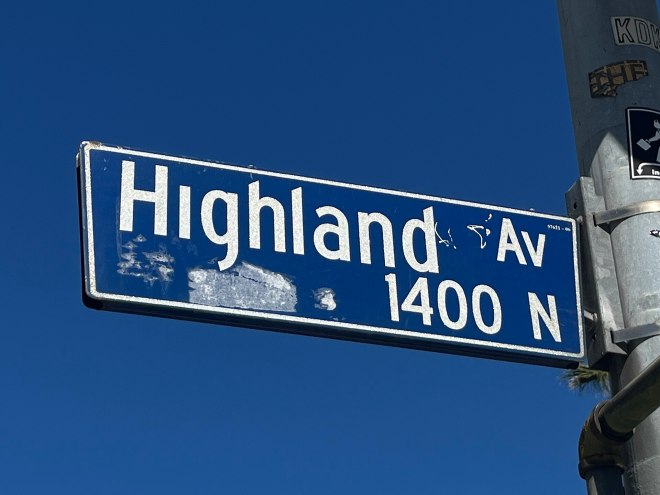
Once seated and ready to go, she decided to put on “Rubberband” by Tate McRae. Even though the current song of McRae’s “in fashion” was “Housewife.” Which most might have presumed Lolita would be all about, considering her fixation on posting “little missus”-type imagery to her socials (that is, whenever she could “remember” to post—she being such a “down-home” girl that it was hardly a priority for her). But no, selecting this by now “deep cut” in McRae’s canon was just so very “on-brand” for Lolita. Besides, she had plans to play it while sitting at a light on Highland Avenue as she filmed one of her signature “driving videos” to the lines, “Midnight driving/Running through Highland.” But, per the caption she gave to her legions of followers, it just so happened that, in one of the many “kismet” moments that she “inherently” attracted because of her “energetic alignment,” a woman with a sign that read, “Trying to stay out of an abusive relationship” approached her car. Or at least, that’s what Lolita told her followers it said (this per the caption she wrote, though Lolita would later vocally quote it in the same video as, “Fleeing an abusive relationship”).
And, for added effect, there are nothing but greenlights in Lolita’s rear window as she’s “stuck” there at what seems to be the only red one for miles. But what her many viewers/fans didn’t know (nor did they care to) is that she was very aware of how L.A. stoplights were timed, and she had already clocked the woman with the sign about two blocks away, getting her phone ready to film herself as if this were all “candid,” “totally random” and “unexpected.” As if she casually dipped into her red Birkin bag all the time to pull out a hundy-dollar bill to fork over to someone that might just as soon stab her and take the rest. Particularly since it was apparent this person had no clue who she was—and rightly so (hard to give a shit about “celebrity” when you’re barely getting by). Something that clearly charmed/got Lolita off (even as it sent her self-confidence into a tailspin) as she replied to the question, “What’s your name?” with a simple (but oh so coy), “Lolita.”
Though such an “unusual” name might have tipped some people off to this being a famous person, the woman didn’t seem to flinch (though, of course, she wasn’t actually featured on camera). She was just glad to score such a large sum and had “god bless” Lolita in return for that bounty. Though, little did this woman—named something like “Anson,” from what could be gleaned from the audio—know, Lolita’s bounty would be far greater and more valuable than God’s blessing (and so, too, incidentally, would Tate McRae’s thanks to this unexpected shoutout).
Indeed, the posting of this video would confirm all the long-held beliefs about Lolita’s aura of “beneficence,” her undeniable “good nature.” It would also give fans the kind of “Easter egg” imagery they always got hard for. In this scenario, a blurry pan-around to reveal, for those “eagle-eyed” enough to notice it, a giant billboard for Violent Night 2 (Lolita clearly wasn’t thinking about the implications of “promoting” David Harbour’s work—an automatic blow to Lily Allen and the abusive relationship she fled). As if to say this moment was all the more uncanny and fortuitous than anyone originally imagined. That Lolita was clearly meant to “save” this woman with her cash tonight (and yes, a one-hundred-dollar bill for Lolita was essentially a one-dollar bill. It didn’t make a dent in her wallet at all).
Of course, what no one could have known—because Lolita didn’t want them to—is that it was all by design. Hers, that is. From orchestrating the McRae song to play while on Highland to timing herself to be stopped at a light to taking note of the woman with the sign to processing the “appropriateness” of a Violent Night 2 ad being right by them. It was all so perfect and beautiful in its “authenticity.”

